Last updated:
Investment diversification is an investment management strategy that reduces the impact of some of your investments performing poorly.
What is diversification?
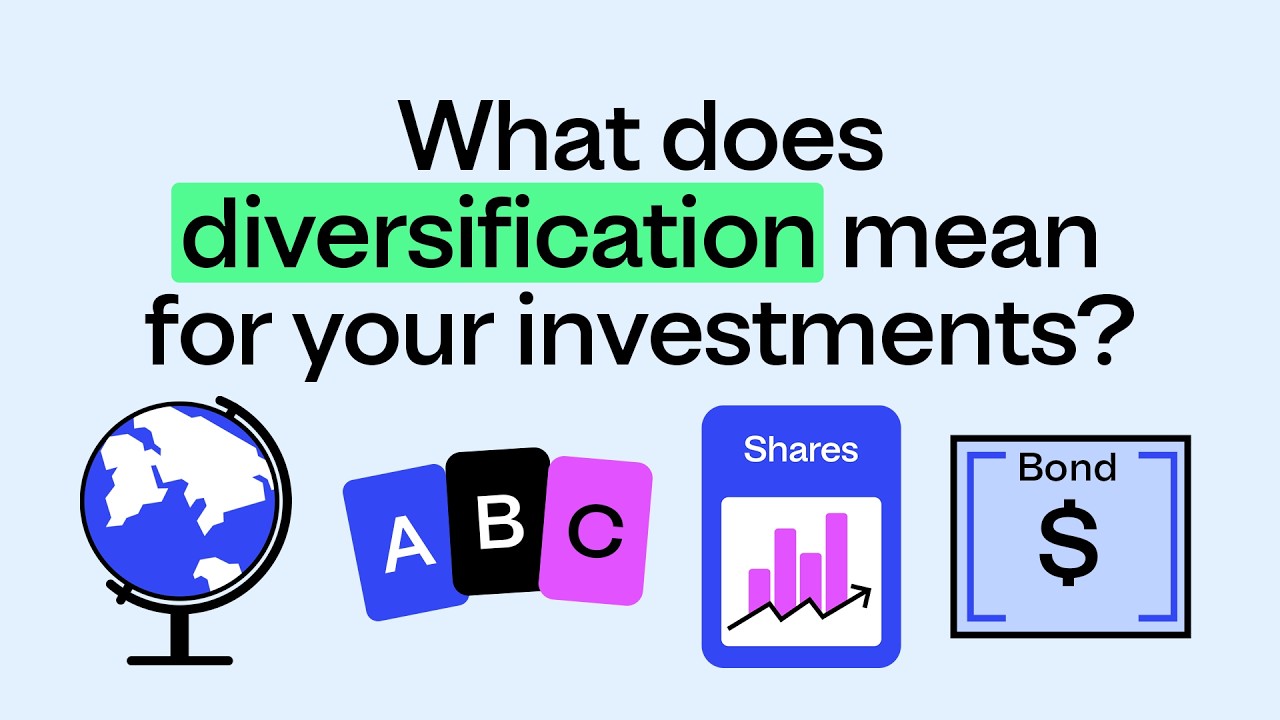
When it comes to investing your money, diversification means spreading your money across a number of different investments, to reduce the overall volatility of your portfolio. For example, you can spread your money across types of assets, across investment sectors, across countries and across investment styles.
Diversification reduces the volatility of your portfolio, because different types of assets do well at different times. If one business or sector fails or performs badly, these losses might be offset by strong performances of other investments you hold.
The types of risks that diversification can reduce the impact of include:
- A downturn in share markets. Holding other asset classes such as bonds or cash can reduce how much the value of your total portfolio falls.
- A single company collapsing. If you own shares only in that business, you could lose most or all of your money.
- Whole industries staying flat or losing value for years and underperforming other industries.
- A single country’s share market falling.
- Adverse currency fluctuations.
What is diversification
How to diversify your investments
There are many ways to diversity your investments. Here are four commons ways.
1. Diversify across asset classes
Investments fall into four main types, called asset classes:
attach_money Shares give you part ownership of a company. Historically, shares have produced higher returns than other traditional asset classes but also have a higher chance of falling in value in any one year. Learn more about shares.
attach_money Fixed income investments (including bonds) often involve loans to governments or companies that pay interest, and typically produce lower returns than shares, with a smaller chance of falling in value.
attach_money Property can earn rental income and grow in value over time. For most Australians, their main property holding is their family home rather than an investment. Some people also own investment property or property funds. Learn more about property investment.
attach_money Cash in a bank account, for example term deposits, earns interest. The risk of losing it is very low but over time, inflation reduces what your cash can buy.
Choosing a mix of the four asset classes can help protect you if any one investment goes wrong.
The way your super fund invests is probably a good example of diversification. Check your fund's website to see what ‘diversified’ investment options they have, and what the mix of asset classes is. See super investment options for more information.
2. Diversify within an asset class
Within each asset class, you can diversify further by holding a mix of different investments.
For shares, that might mean holding companies in different industries or countries. That means any one company, industry or market having a bad year has a smaller effect on your total investments.
Fixed income investments also differ from each other. Government bonds are generally safer than company bonds, while interest rate movements tend to change the value of long-term bonds more than short-term ones. Holding a mix can spread your risk.
3. Diversify across countries
Australia has a small share of the world's investment opportunities.
Investing some of your money overseas will lower the risk of investing in a single market. For example, investments in Asian and European markets may perform well when the Australian markets falls.
Investing in ‘unhedged’ overseas assets means that movements in exchange rates will affect their Australian dollar values. This exchange rate risk can work for or against you and can be considered an additional layer of risk and diversification. You should understand this risk if investing overseas.
4. Diversify through funds
A simple way to diversify is to buy into a fund that holds many investments for you. As an example, an ETF tracking the S&P/ASX 200 gives you exposure to Australia’s largest 200 companies through one investment. A diversified managed fund can hold shares, bonds and cash in a single product.
Managed funds pool money from many investors, and a fund manager buys and sells a range of investments within the fund.
ETFs are managed funds you buy and sell on a stock exchange, like a share. Many ETFs track a market index, such as the S&P/ASX 200.
Listed investment companies (LICs) are companies listed on a stock exchange that invest in a range of assets.
You can also diversify across investment managers by using more than one fund manager to reduce your reliance on a single manager’s investment decisions.
Learn more about managed funds, ETFs and LICs.
How to keep your portfolio diversified
The value of each of your investments will change over time in different ways. That means what starts out as a balanced mix of assets can drift. If shares rise while bonds fall, more of your portfolio ends up in shares – and your portfolio’s overall risk or volatility is likely to rise with it.
Rebalancing means adjusting your investments from time to time back to the mix that suits your goals and appetite for risk.
Two common ways to do this:
- Investing some extra money, such as a tax refund, into investments that you want more exposure to.
- Selling some investments and putting your money in other types of investments. Selling may create a tax bill – see Investing and tax.
See Keep track of your investments for how and when to review.
Finding the right investments can be challenging. If you need some help to build a diversified portfolio, talk to a financial adviser.
Join thousands of Australians and get tools, tips and calculators to help with your money - straight to your inbox each month.
Sign up